


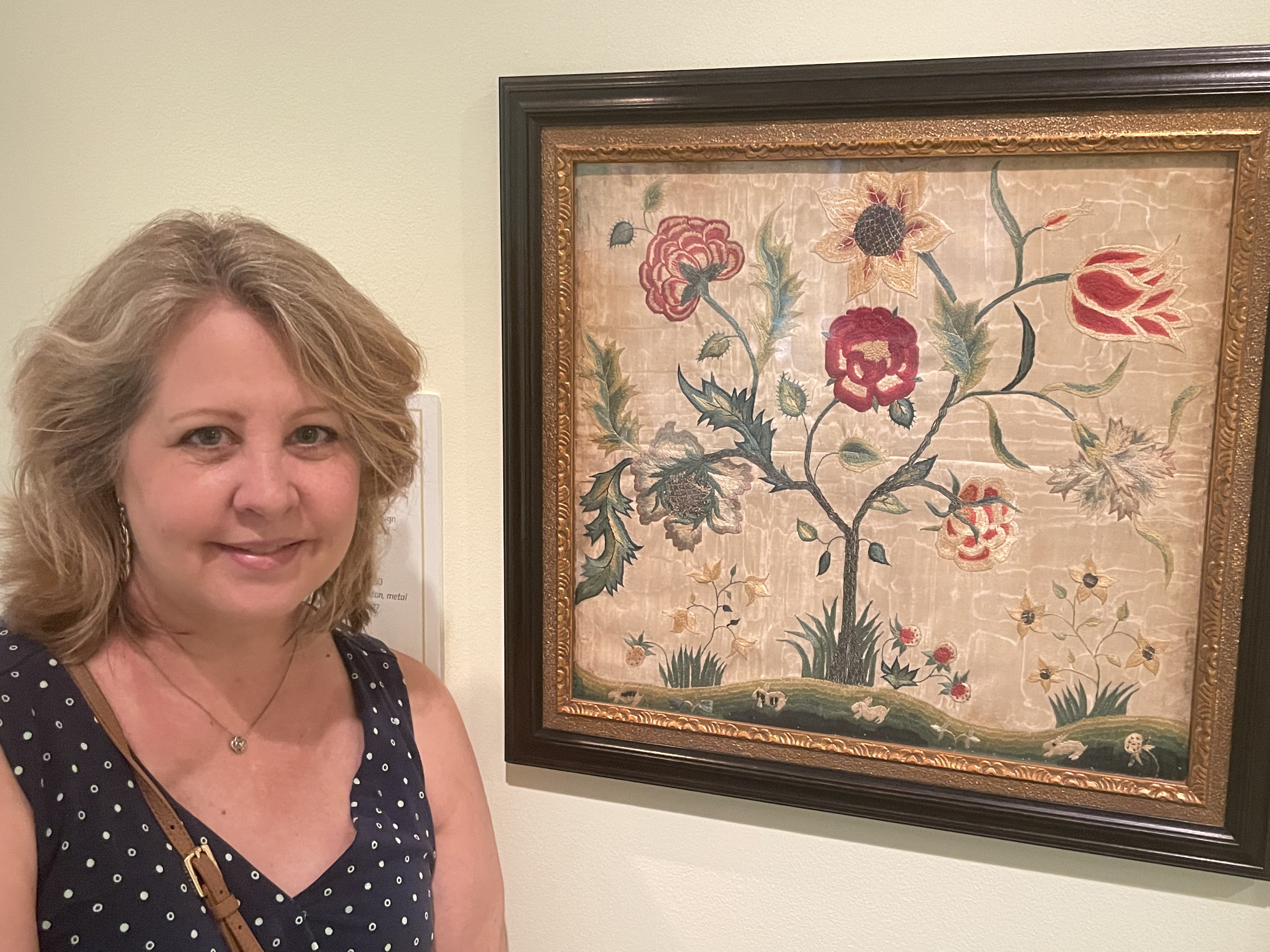
I adore Early American needlework. At long last, I recently traveled with my husband to Winterthur Estate and Museum to explore the priceless collection of American decorative arts assembled by Henry Francis du Pont in the early decades of the last century. Located in the heart of Delaware’s lush Brandywine Valley, Winterthur is home to more than 90,000 historical objects, from furniture to fine art, rare books to nature’s curiosities, and of course . . . needlework!
In Search of History
On this particular visit, I went in search of examples of Early American needlework. Project Two of my EGA Crewel Master Craftsman program is a study of the techniques, materials and colors used by American needle artists in the 17th and 18th centuries. I found many lovely examples, including the tree of life motif pictured above. The artist worked this piece from Philadelphia in fine silk threads on muslin and crepeline around 1750.
As expected, European needlework heavily influenced its early American counterpart. In particular, crewel designs and materials from England — where much of the resettled population originated — inspired the designs produced in colonial America. We saw signs of that legacy while touring Winterthur. Yet it is plain to see that a distinct American style began to emerge over time.
Early American Style
In particular, materials used, colors, and stitch selection stand out as important differentiators between American and English crewelwork. Materials were hard to come by in colonial America and often had to be produced at home. The process was time consuming — raising of sheep, spinning of wool, weaving of ground cloth. Stitchers adapted by creating simpler designs that required less of the scarce materials.
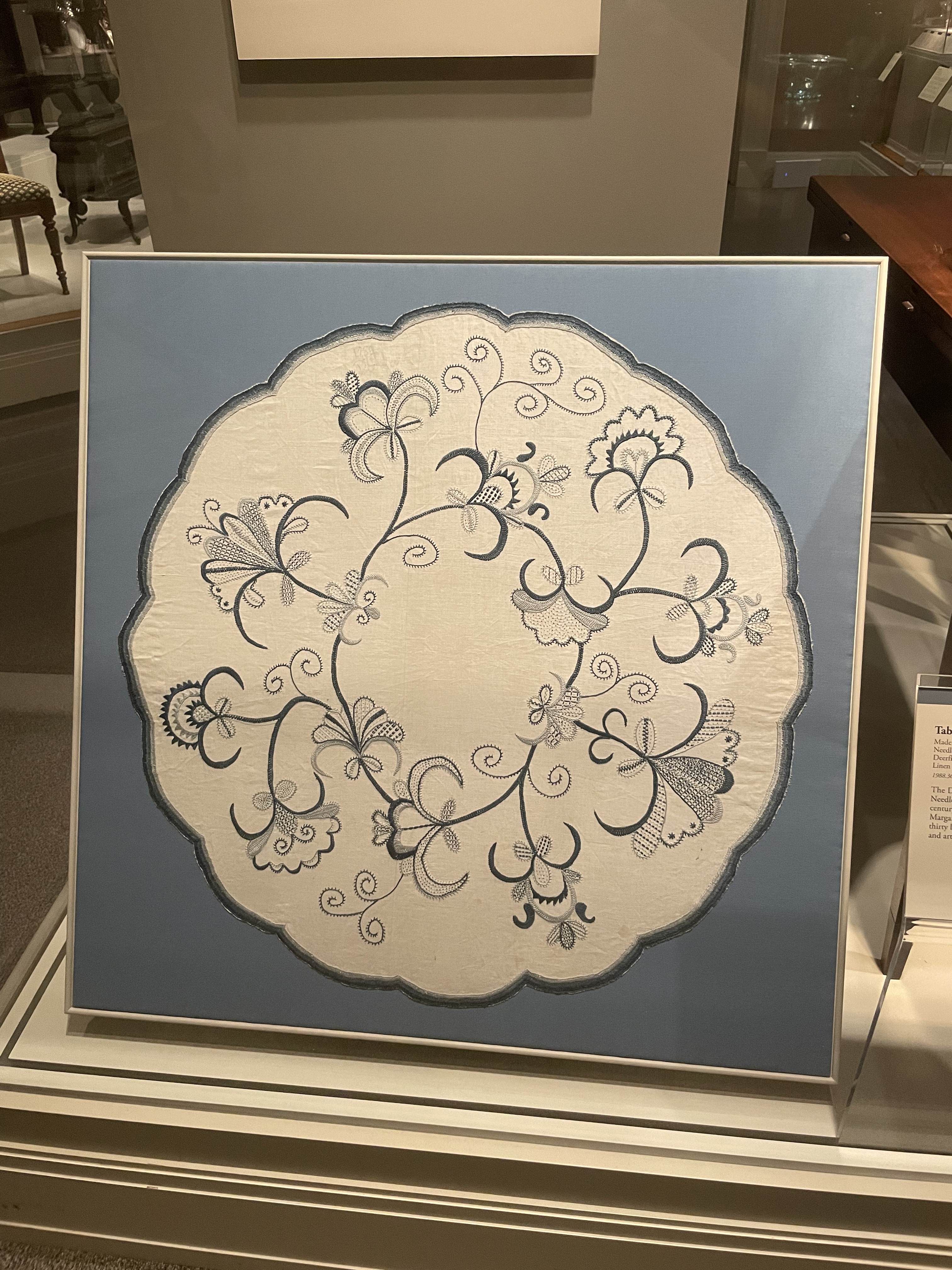
Likewise, color was at a premium. Early American needleworkers did not have the luxury of commercially dyed threads and wools. Instead, they often created their own using shrubs, berries, nuts and other natural materials. Indigo was a prominent color in this era because it was easy to obtain and offered a range of shades. To offset a smaller color palette, Early American stitchers often used creative stitching techniques to give texture to their designs. A terrific example on display at Winterthur is the blue and white table cover shown below, stitched in the Deerfield style.
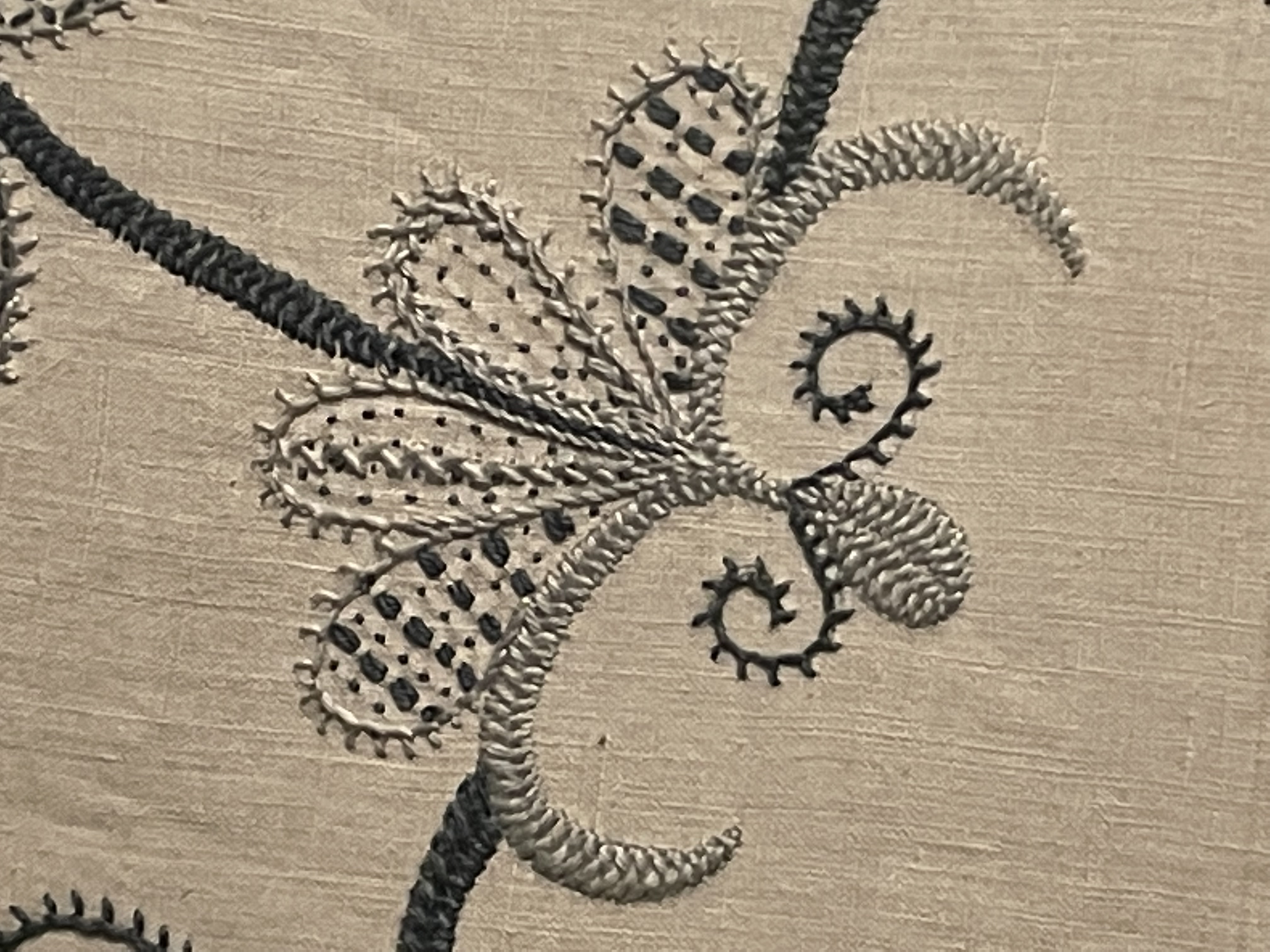
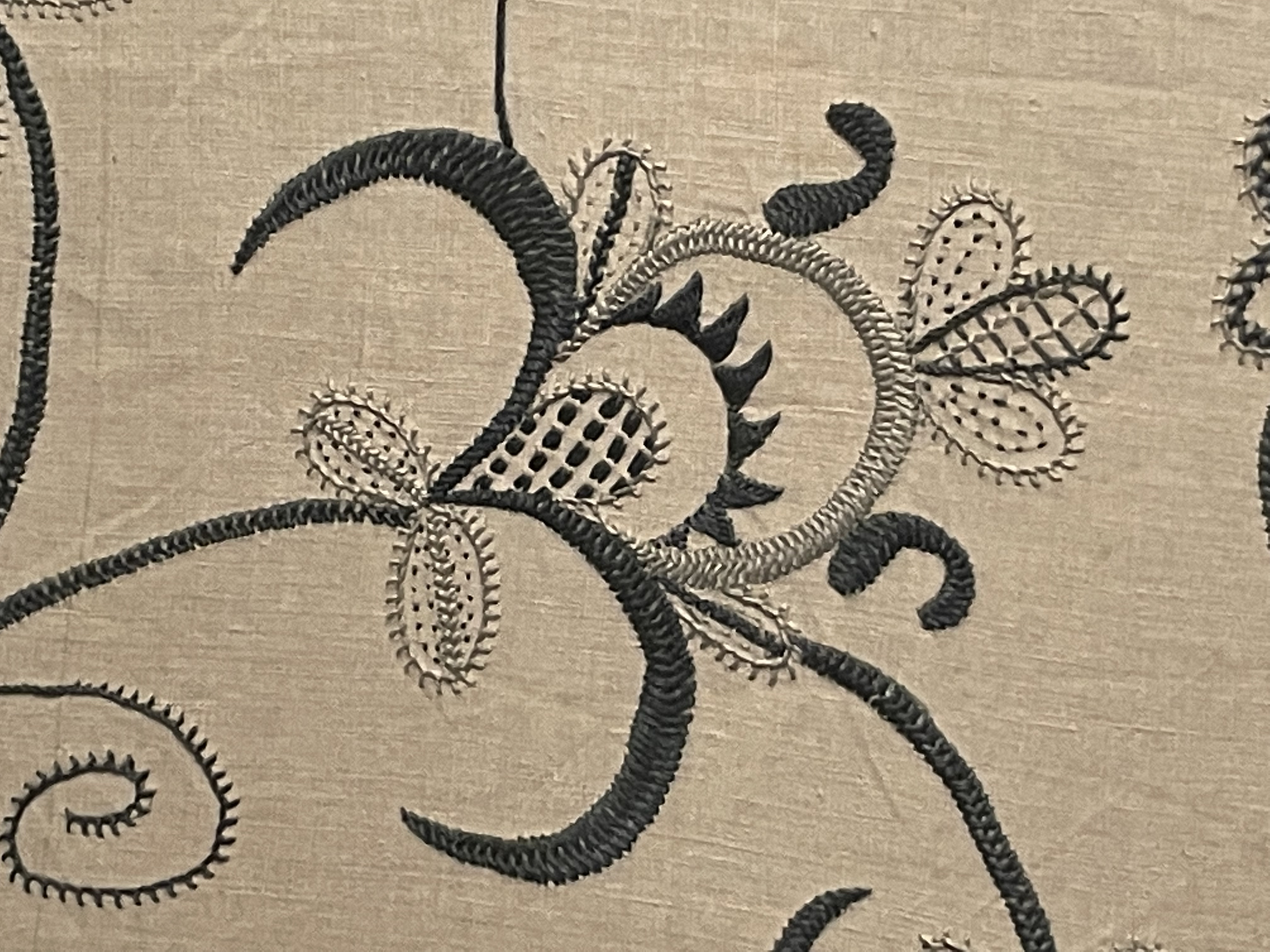
Having studied the works of textile historian (and long-time curator at Winterthur) Susan Burrows Swan, I expected to find a large collection of needlework samples on display in the museum and throughout the adjoining estate. Sadly, I discovered many pieces have been stored to clear space for other exhibits. Even more surprising, the docents we encountered had limited knowledge of the museum’s extensive needlework collection.
Even so, needle arts remain an important category within the Winterthur collection, as evidenced by a newly opened exhibit, The Needle’s I: Stitching Identity. Through historic samplers, clothing and contemporary pieces, the exhibit examines how needlework creates a sense of self as it relates to family, memory and craft tradition. Also the subject of a two-day conference in October, the exhibit will remain open through January 8, 2023.
You must be logged in to post a comment.